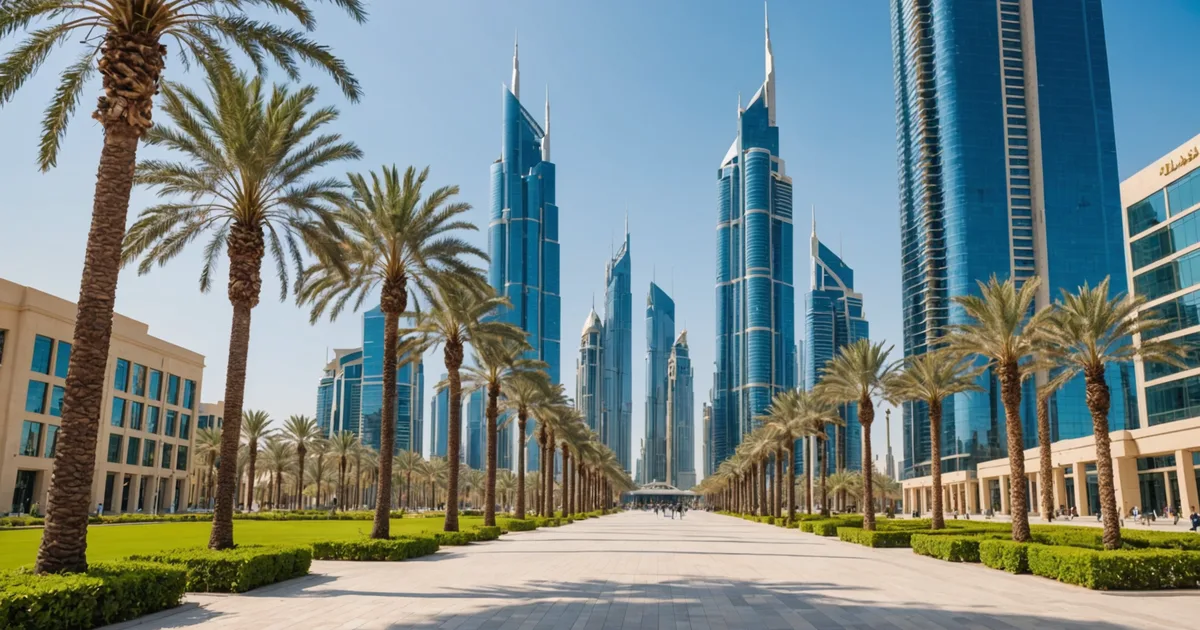
Dubai Internet City is one of the denser clusters of technology employers in the region. If you work in tech, digital media, or a professional service adjacent to the tech sector, there is a good chance you spend meaningful time here. This guide is for people who need workspace in DIC on a flexible basis: not a permanent desk or a private office lease, but a place to work for a day, a morning, or a few hours between meetings.
We have spent the last year building Letswork specifically around this need in DIC, so we have a reasonably detailed map of what is available, what it costs, and what makes one space better than another for different types of work days.
Understanding the DIC layout: why location within the cluster matters
DIC is organized around a central ring road with buildings numbered and clustered in groups. The cluster is larger than it looks on a map: walking from the eastern end near Gate Village to the western edge near the DIC metro link takes 15 to 20 minutes on foot in the midday heat. In a Dubai summer, that walk in business attire is not trivial.
Most of the coworking inventory in DIC concentrates in the central and eastern part of the cluster, around buildings 3, 4, 5, and the surrounding area. This is also where the largest density of technology company offices sits, which means foot traffic and ambient professional energy are higher there. If you need a desk for a morning before a client meeting at a nearby office, being in the central cluster saves you the walk and the heat.
The western edge of DIC has less coworking density but also less ambient noise. If you need quiet and do not have meetings nearby, spaces in the western part of the cluster can be a better working environment than the busier central buildings. The tradeoff is accessibility: you need transport to reach the western edge from the DIC metro station, whereas the central cluster is an easier walk from the metro.
Space types and what each is actually good for
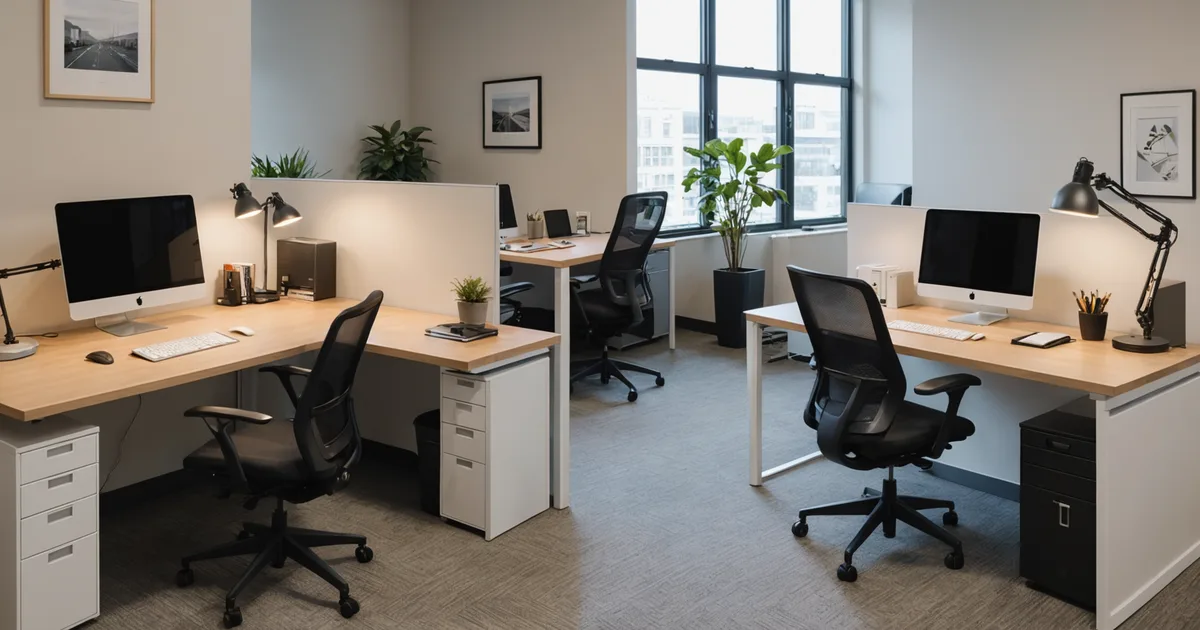
Hot desks are the most common flexible option in DIC coworking spaces. You get a shared open-plan desk, usually with wifi and power, at a daily or hourly rate. Hot desks are the right choice when you need a place to focus on individual work: writing, coding, reviewing documents. They are a poor choice when you need to take a client call. Most DIC hot-desk environments have ambient noise levels that make unmanaged calls uncomfortable for both you and the people around you.
Private pods solve the call problem. A pod is typically a small enclosed workspace with glass walls for natural light and acoustic separation from the main floor. They rent at a higher hourly rate, typically AED 80 to 100 per hour in the DIC market, versus AED 45 to 60 for a hot desk. If your day involves two or more client calls, the pod premium is usually worth it. Pods are also the most constrained inventory in DIC: most coworking spaces have a limited number of them, and they sell out on Tuesday and Wednesday mornings faster than any other space type.
Meeting rooms are priced per hour and per seat. The DIC market for meeting rooms runs from small 4-seat rooms at AED 100 to 150 per hour to boardroom-style 10-seat rooms at AED 300 or more. If you are hosting an external client, a proper meeting room signals professionalism in a way that a hot desk area does not. For internal working sessions of two to four people, a meeting room is often overkill: two people at adjacent hot desks or a small pod is more practical and significantly cheaper.
What to look for when comparing spaces
Wifi reliability is the most variable factor across DIC coworking spaces. The difference between a space with a 200Mbps dedicated symmetric connection and one sharing a 50Mbps residential-grade link across 20 users is noticeable in practice. Before committing to a space for a half-day or full day, it is worth checking whether they list their internet specification. Spaces that publish a specific speed figure generally maintain it; spaces that advertise "high-speed wifi" without a number tend to be vaguer about performance.
Monitor provision is the second most requested amenity in our platform data. Most hot desks in DIC do not include monitors by default; pods are more likely to have one. If you are doing any screen-intensive work (design, video editing, multiple windows), clarifying monitor availability before you book avoids a frustrating morning.
The check-in process matters more than it sounds. Some DIC spaces require 24-hour advance booking and have a staffed front desk that only operates during specific hours. If you are booking on the same day or arriving outside normal hours, a space with an automated entry system or a later staffed window is more practical. On Letswork, we ask operators to specify their check-in process so members know what to expect on arrival before they book.
Pricing expectations in the DIC market
DIC coworking pricing has a reasonable range that is useful to know before you start searching. Hot desks typically run AED 45 to 60 per hour and AED 90 to 150 for a full day, depending on the space's amenity level and location within the cluster. Private pods tend to be 60 to 80 percent more expensive per hour than hot desks in the same building. Day passes for hot-desk access range from AED 80 to 150 depending on the operator.
Monthly memberships in DIC vary considerably. A hot-desk membership giving unlimited access typically starts around AED 1,200 to 1,800 per month for open-plan access. Dedicated desks with storage go from AED 2,000 to 3,000 per month. Private offices are a separate conversation with each operator and vary widely by size and included services.
If you work in DIC two or three times a week without a consistent daily routine, the pay-per-use route almost always comes out cheaper than a monthly membership. The break-even point where a membership starts to beat per-booking pricing is generally around 16 to 20 days of hot-desk use per month in the DIC market. Below that frequency, transactional booking is the better economic choice.
How same-day booking actually works in practice
One of the reasons we built Letswork around same-day and short-notice availability is that DIC professionals frequently decide where to work on the morning of. A meeting gets rescheduled. A project needs deep focus today. You are in the neighborhood and need two hours before a client visit. These are decisions made at 7:30am or on the metro, not the night before.
Operators on our platform confirm real-time availability for their spaces, which means when you search at 8am on a Tuesday, the results reflect what is actually open right now rather than what was available when the operator last updated their calendar three days ago. For same-day booking in a cluster where popular pod slots fill by 9:30am on a busy day, that real-time accuracy matters.
The search also accounts for check-in logistics. If an operator requires 30 minutes of advance notice before arrival, their same-day slots do not appear for bookings starting in less than 30 minutes. This prevents the frustrating experience of booking a desk for 9am at 8:55am only to find out the operator cannot have the space ready in time.
A note on what the platform does not cover yet
We are focused on the DIC cluster right now. Some members have asked about coverage in DIFC, Business Bay, and Media City. Those are neighborhoods we intend to expand into, but right now if you need a flexible desk in DIC you will find the most complete inventory on Letswork. For other parts of Dubai, you are still largely dependent on searching each operator directly, which is how the whole DIC market worked before we built this.
The other gap is meeting room booking for external clients. We currently support meeting room booking, but our coverage of dedicated boardroom and training room inventory in DIC is less complete than our hot-desk and pod coverage. If your primary need is a client-facing meeting room rather than individual workspace, it is worth checking directly with the larger DIC coworking operators in addition to what the platform shows.